
Signs of Water Damage Behind Your Siding
What to look for on your own walls when you think water is getting in behind the siding, where it tends to find its way in, and what happens once you've found a spot.
Quick Answer
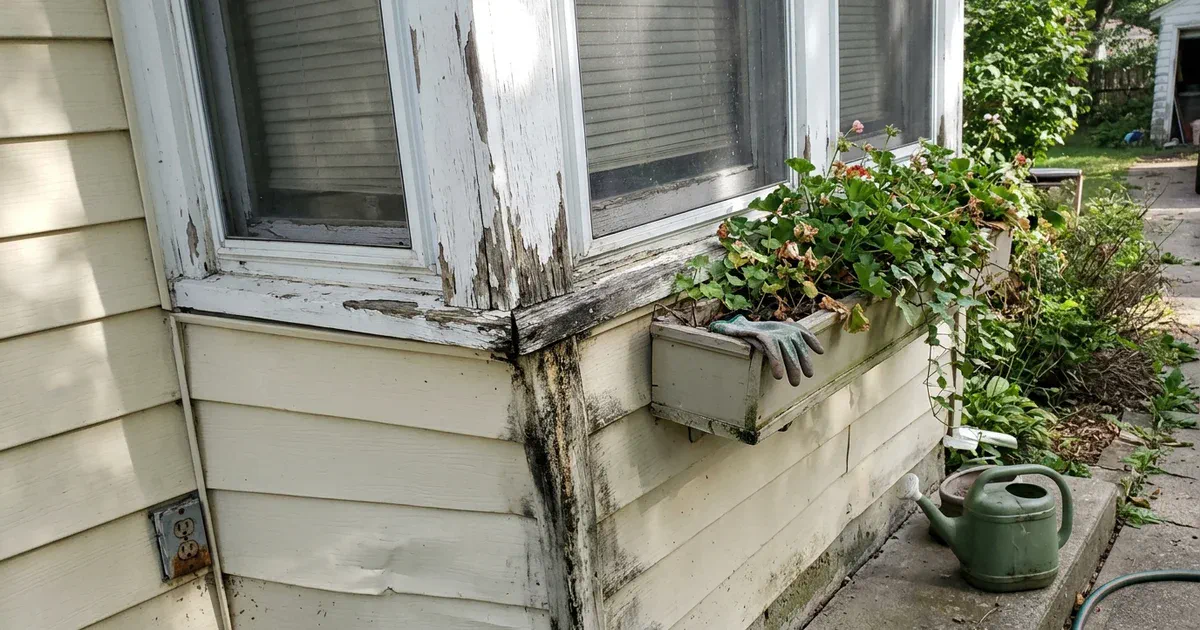
On the outside of the house, the signs of water damage behind siding are paint that peels again and again in the same spot, stains under a window, boards that feel soft when you press them, fiber cement boards with swollen edges, and brown streaks down the siding that start at the eaves. A stain on an inside wall under a window is worth noting too. Any of the first four can mean water is getting in behind the siding at that spot; streaks from the eaves point up at the roof edge. One of these on its own is no reason to think the whole wall is in trouble, and often the repair is to that spot and to whatever let the water in.
Why Water Behind Your Siding Is Easy to Miss
Wind-driven rain can get past siding, and that's what the house wrap behind it is for. It's the layer that keeps weather off the wood, and water that gets past the siding is meant to run down the face of it. Water damage starts when water gets past the wrap and into the wood, for example through a torn spot in the wrap or around a window or door whose flashing has failed. When that happens, Grand Rapids Siding Contractors puts the siding and the sheathing behind it right. Many of the signs are ones you can look for yourself.
Vinyl hides it well. A vinyl wall can stay clean and flat to look at while the wood behind it has been getting wet, so the clues tend to be small ones, in particular places.
Signs of Water Damage Behind Siding to Look For
Peeling paint in one spot. If the paint on the rest of the wall is holding fine and one patch keeps letting go, moisture in the wood behind it is a likely reason. Painting over it won't deal with the water, so it's worth finding out what's keeping that spot wet.
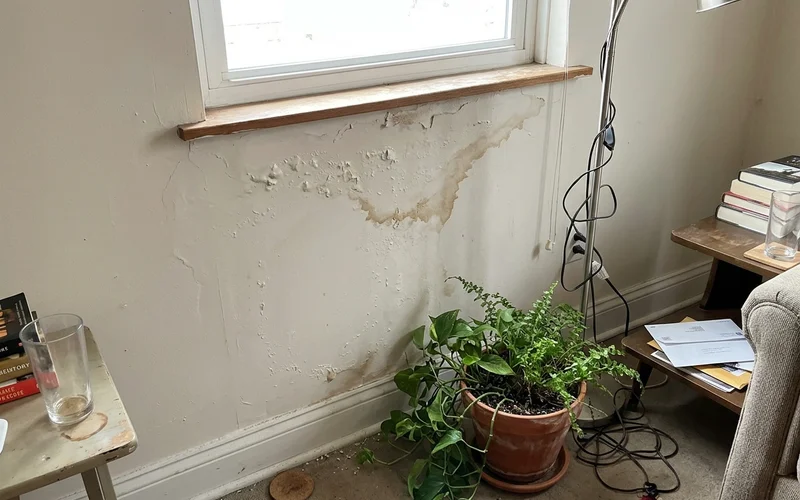
A stain under a window. The flashing around a window is there to steer water out of the wall, and when it fails, the area below the window tends to be where the water shows. You might see it as a dark stain on the trim or siding outside, or as a stain on the wall inside, under the sill. Either one points to the spot we'd want to open up first.
Boards that feel soft. Try pressing on a wood board under a window or along the bottom row with your thumb. If it gives, or the wood has gone dark and crumbly at the edge, it has been wet long enough to soften. Wood that has simply turned gray in the weather is a different thing. That's the surface, and the board under it is often sound.
Swollen edges on fiber cement. Fiber cement can soak up water at cut ends and edges that weren't sealed, and those edges swell. It can happen where boards were butted tight to a roof or kept too close to the ground. A swollen board can be replaced, and keeping the new one dry means finding out how the water got to the old one.
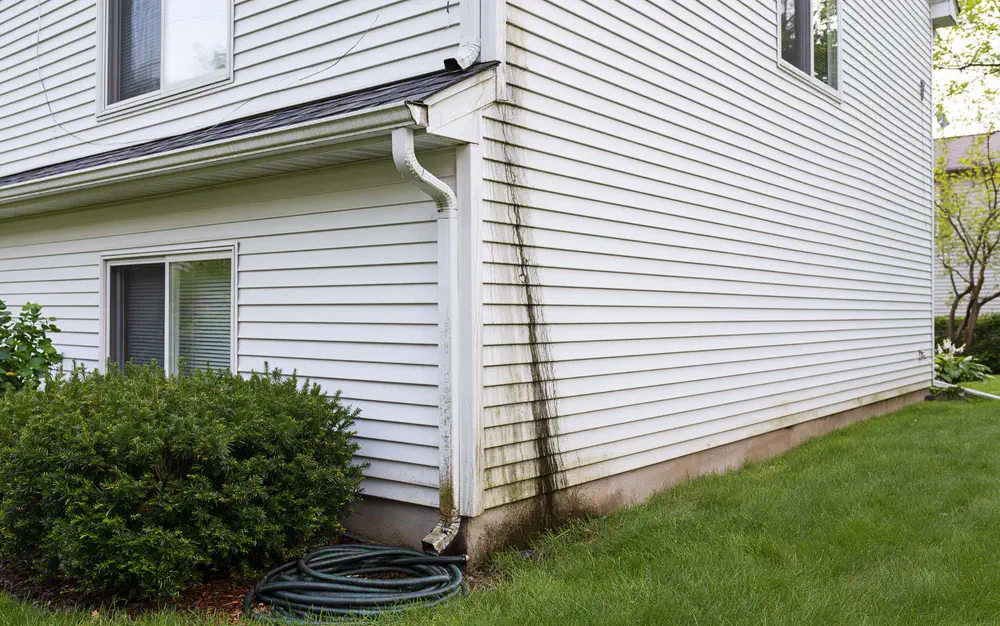
Brown streaks from the eaves. On a house that gets ice along the roof edge in winter, streaks that start at the soffit and run down the siding can mean water has been leaking out of the eave and running down the wall.
Not Every Mark on Your Siding Means Water Damage
Green growth on a wall that stays in the shade is often algae or mildew sitting on the surface. That's an upkeep job, and on vinyl a gentle scrub with a soft brush and a rinse from the hose often takes it off.
Dark streaks on cedar siding have one common cause of their own: the wood reacting with iron from ordinary steel nails.
Wavy vinyl often means it went up nailed too tight to slide in the summer heat. Now and then the cause sits in the wall behind the panels instead. If you can't tell which one you're looking at, we can tell you when we come out.
Where Water Gets In Behind Your Siding
When there's a sign of water on a wall, the place it got in is often close by. These are the spots worth a look as you walk around the house.
Places water can get in behind siding
- Flashing around a window or door that has failed
- A gutter that leaks or spills over against the wall
- Caulked seams that have dried out and opened up
- Cracks and holes in the siding itself
- A lower roof meeting a wall with no kick-out flashing at its bottom edge
Kick-out flashing is worth a look. Where a lower roof, over a garage or a porch, runs into the wall of the house, a bent piece of flashing at the bottom of that roof edge turns the roof's water into the gutter. Without it, that water can run down the wall at the corner, and the siding and sheathing below take it.
Michigan winters add to it. The boards along the bottom of a wall, where snow banks up against the house, and the boards just under a windowsill are often among the first to go soft. On a lot of winter days here, it freezes overnight and thaws in the afternoon, so snow banked against those rows can keep melting there.
What to Do When You Spot Water Damage Behind Siding
Water that keeps getting in keeps soaking the same wood, so a spot like this is worth having looked at sooner rather than after another winter. When you send the form, a line about which wall and what you've seen gives us a place to start.
We look over that spot and the siding near it before anything comes off. Any sheathing that turns out wet or soft, you'll see along with its price before it's replaced. A small patch of new sheathing under the siding is ordinary repair work.
The other half of the job is the cause. A new board over a wall that's still taking water won't stay dry for long, so whatever let the water in gets fixed too, whether that's the flashing at a window, a seam that opened up or the spot where a roof meets the wall. If the water is coming off the roof itself, that part is for a roofer, and we'll let you know what we found.
Soft wood on wall after wall
If soft wood shows up on wall after wall, new siding for the whole house can be the better use of your money, and we'll explain our thinking.
Water Behind Siding: Common Questions
What is behind my vinyl siding?
Usually a layer of house wrap, and behind that the sheathing, the wood that makes up the outside of the wall. On some older houses, the vinyl went on over the original wood siding, so that wood is still there underneath. When a piece of vinyl comes off for a repair, it's a good chance to see what shape the wrap and the sheathing are in.
Spotted One of These Signs on Your Siding?
Let us know where on the house you've seen it. We'll come and look at that wall with you and put the repair in a written estimate.
Get a Free Estimate